Artificial intelligence has evolved significantly over the past few decades, with a strong push towards new heights since the much-anticipated ChatGPT launch of 2022. From the early days of mainstream Gen AI to major strides by Anthropic and Google, the impact of AI-driven software development has been massive. Developers had to write code from scratch in most cases until the launch of AI-native IDEs and repo context in 2024. Then came ‘vibe coding’, Claude Code, Codex CLI and MCP integrations, resulting in faster, more accurate, and accessible development. Currently, the software development industry relies considerably on market-leading AI coding platforms to meet its clients’ needs.
So, what are the prospects of AI as we look forward to 2027? How will AI in software development help companies improve their bottom lines and achieve newer efficiency benchmarks?
Read on to gain some perspective on the future of AI software development.
The Probable Impact of AI in Software Development In 2027
By 2027, artificial intelligence in software development is expected to move beyond suggesting snippets and begin managing entire engineering workflows, from drafting specifications to running tests. The real shift is not faster typing but wider responsibility, and it gives teams exciting room to achieve more.
- Agentic Orchestration Takes Centre Stage
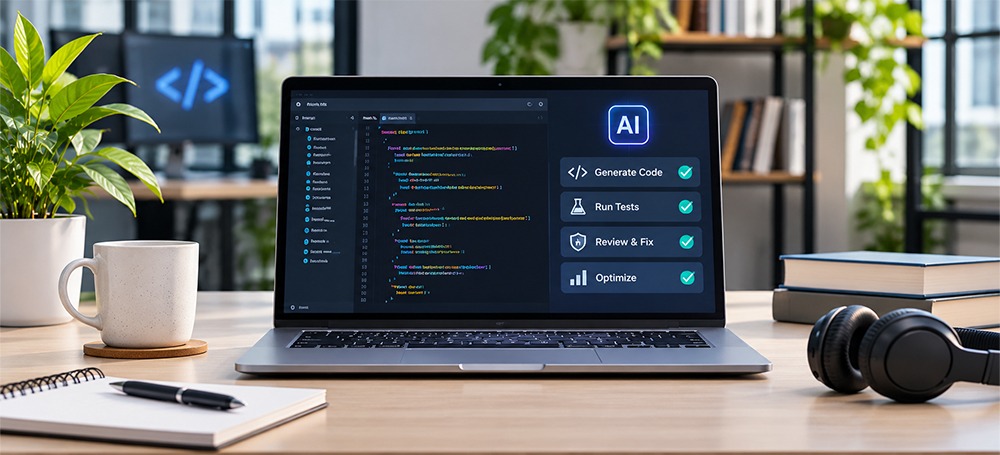
Rather than typing line by line, developers will increasingly assign tickets to background agents that draft specs, write code and run tests asynchronously. This makes AI-driven software development far less dependent on the IDE. Boilerplate and setup hurdles shrink, freeing engineers to shape agent permissions and environment harnesses and to focus on creative problem-solving.
- Verification Moves to the Centre
Since agents can produce substantial pull requests within minutes, review is where human expertise adds the most value. Leading teams are building tiered, risk-based pipelines:
- Automated gates: linting, type checks, tests and security scans handle mechanical checks before a human opens a diff.
- Specialised AI reviewers: a different model reviews the code than the one that wrote it, bringing a fresh perspective.
- Risk-routed sign-off: low-risk changes get a quick check, while authentication, payments and database migrations go to code owners.
- Focused pull requests: size caps and human-written intent summaries keep reviews sharp and meaningful.
Exploring AI-driven software development for your own products? Cresentek delivers it at competitive rates with fast turnaround times. Talk to our team to see how it could fit your roadmap.
- Legacy Modernisation and Bespoke Builds
AI software development will also take on the tedious work teams have long postponed, such as translating legacy codebases and upgrading framework dependencies. Lower development costs mean mid-sized organisations can build custom internal tools around their exact operations instead of fitting workflows into off-the-shelf SaaS platforms.
- Governance by Design
As early enthusiasm matures into strategy, enterprises will back agentic projects that show a clear return on investment. Regulation, such as the EU Cyber Resilience Act taking full effect in late 2027, will make security scanning, audit logs and deterministic guardrails standard practice wherever AI touches production systems, which builds trust in the results.
Evolving Roles in AI in Software Engineering
Routine implementation will matter less than architectural taste, product sense and the ability to solve complex problems. AI in software engineering will enable leaner, cross-functional teams with smoother handoffs between product, design and engineering, with senior engineers guiding the work and bringing their experience to every release.
Measuring What Matters
Success will no longer be judged by lines of code produced. Teams are beginning to size tickets by review attention rather than coding effort, and to track review wait time, rework rates, escaped defects and revert rates. These metrics show how well the speed of AI-driven software development translates into stable, dependable delivery, which is exactly what leadership needs to see when judging the bottom line.
Final Thoughts: Preparing for AI-Driven Software Development
The winners in 2027 will pair speed with discipline: strong test suites, clear review rules and well-defined governance. Businesses that embrace AI in software development thoughtfully can look forward to timely, reliable delivery and a real competitive edge.
With over 14 years of experience across multiple sectors, Cresentek helps businesses put AI in software development to work in a way that is practical and well governed. If you are planning your next build, get in touch for a no-obligation conversation.
Frequently Asked Questions
1. What is AI in software development?
AI in software development is the use of intelligent tools and agents to draft specifications, write code, run tests and review changes. Developers set the direction, while AI handles routine work so they can focus on higher-value problems.
2. How can teams get the most from AI-driven software development?
Pair AI-driven software development with strong automated testing, risk-based review and clear governance. These foundations let teams move quickly with confidence.
3. How can businesses benefit from artificial intelligence in software development?
Benefits of incorporating artificial intelligence in software development include faster delivery of routine work, quicker legacy migrations and affordable custom internal tools. Sound review practices and the right metrics help these gains last.
4. How is AI software development changing code review?
Since AI software development agents produce pull requests in minutes, review is becoming a more strategic activity. Tiered, risk-based pipelines let automated checks handle mechanical errors, so human attention goes to high-risk logic.
5. Which skills matter most in AI in software engineering?
System design, code review, agent configuration and security awareness top the list of valuable skills for AI in software engineering. Clear communication across product, design and engineering teams matters just as much as technical depth.